


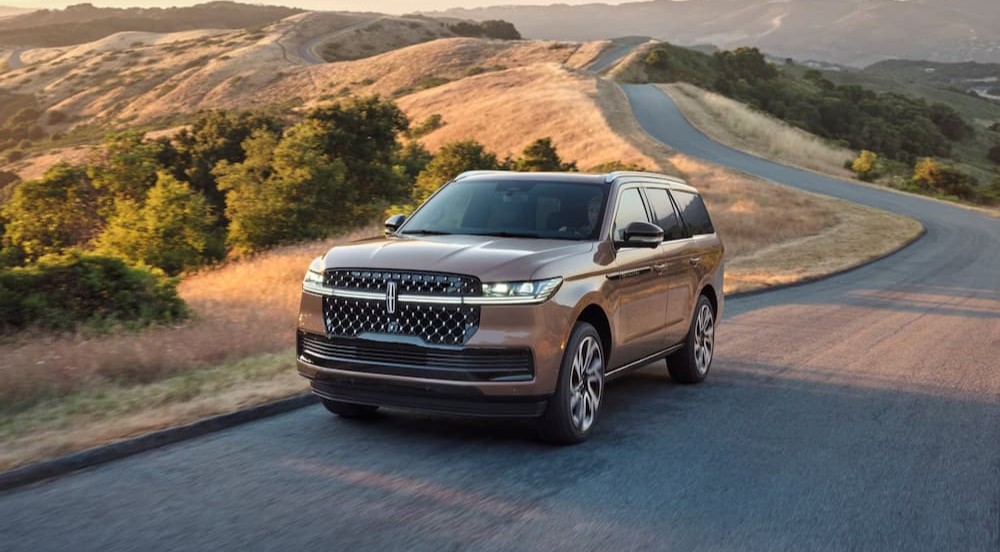
The Lincoln Navigator and Cadillac Escalade aren’t just two of the larger options in the SUV segment; they’re also two of the most luxurious. Cadillac’s luxury credentials are well known, with the brand’s roots dating back to 1902, but the two automakers actually share a common founder in Henry M. Leland.
The precision machinist was instrumental in helping to create Cadillac from the ashes of the failing Henry Ford Company, but he left the Detroit automaker to found Lincoln when Cadillac was sold to GM in 1909. The two brands have been trying ever since to one-up each other as the top name in American luxury, and it’s the buyer who stands to benefit.
The century-long rivalry continues to this day, with each company fielding its own full-size luxury SUV. The Lincoln Navigator and Cadillac Escalade are two of the longer-running models in the premium segment, with both dating back to 1998. These three-row rides have been locked in a fierce competition ever since, but which model comes out on top in the battle between the 2026 Lincoln Navigator and 2026 Cadillac Escalade?
We’ve compiled a brief comparison outlining key differences between the two options, covering everything from efficiency and performance to cargo and passenger capacity, infotainment, safety, and hands-free driving tech. Join us as we delve into each SUV and learn how the secret to a superior ride might be waiting for you at LaFontaine Lincoln Grand Blanc, your local Lincoln dealer.
Premium Performance
It takes a lot of power to move a full-size SUV down the road, and Lincoln didn’t take any chances when it came to crafting the 2026 Navigator. A brawny, twin-turbocharged 3.5-liter V6 engine provides the body-on-frame SUV with 440 hp and 510 lb-ft of torque—two numbers that the 2026 Escalade simply can’t match.
Cadillac’s own full-size model is built around a massive 6.2-liter V8, but the lack of a turbocharger sees the engine top out at just 420 hp and 460 lb-ft of torque. Cadillac addresses this lack of power with a V-Series model that swaps the standard V8 for a supercharged V8 that delivers 682 hp, but you’ll pay a pretty penny for the extra ponies, with the high-performance variant starting at almost $170k.
The naturally aspirated approach also has a noticeable impact on the Escalade’s fuel economy, limiting it to as low as 18 MPG on the highway. The Navigator fares much better, with up to 22 MPG on the highway and 17 MPG combined, but it’s the Lincoln’s dynamic drivetrain and towing capacity that really give it an edge over the Cadillac.
While the 2026 Escalade can be optioned with four-wheel drive (or all-wheel drive on the V-Series), the base trim is saddled with a rear-wheel drivetrain that’s a little disappointing for the price. Lincoln breaks the mold with one of the segment’s only standard four-wheel drivetrains, and the results speak for themselves.
The Navigator not only instills drivers with greater confidence when facing tough weather conditions or off-road scenarios, but it’s also the speedier option, with a faster zero-to-60-mph time, and it can best the Escalade in terms of towing capacity, with the ability to pull 8,700 lbs versus the Cadillac’s 8,100 lbs.
Deluxe Dimensions
While luxury features might help seal the deal, the main selling points of the Lincoln Navigator and Cadillac Escalade come down to their passenger and cargo space. Neither model is going to leave passengers feeling cramped, but it’s important to dive into the numbers if you want to ensure long-term satisfaction.
Both SUVs offer spacious seating for up to seven passengers and a rear cargo area that’s designed to fit furniture, large appliances, and other cargo that would stymie smaller models. The Navigator provides nearly 22 cu.ft. of cargo space while still seating seven riders, but that figure grows to almost 70 cu.ft. when the third row is tucked away and up to 107 cu.ft. when both of the back rows are stowed.
The Cadillac hews pretty close to its Lincoln rival at 25.5 and 72.9 cu.ft., and while it does have the edge with 120.5 cu.ft. of max cargo room, the Navigator provides a more comfortable experience for passengers with its superior second-row and third-row shoulder room and legroom. The difference is especially notable in the third row, where even adults can stretch out and relax with 43.5 inches of legroom, compared to the Escalade’s 34.9 inches.
The Navigator and Escalade fall on the larger end of the SUV spectrum, but what if you need more space than even a full-size model can offer? For those who regularly find themselves bumping up against their vehicle’s cargo capacity, there’s always the extended-wheelbase option. Lincoln offers a longer version of its model, dubbed the Navigator L, while the Escalade follows suit with an available ESV version.
The Navigator L substantially ups the SUV’s storage capacity, allowing the full-size model to accommodate up to 121.6 cu.ft. of groceries, camping gear, sports equipment, or whatever other cargo you might need to get through the week. The larger Navigator also offers 67% more cargo capacity when all three rows are in use, logging 36.1 cu.ft. to the standard model’s 21.6 cu.ft.
It’s largely the same story with the Escalade ESV, though the improvements are a little less drastic. While the Cadillac beats the Lincoln in maximum storage capacity, the Escalade ESV’s base storage capacity increases by only 62%.
Leading Luxury Tech
While it might not capture the same market share as the Escalade, the Lincoln Navigator can go toe-to-toe with its Cadillac counterpart when it comes to high-end comfort, convenience, and infotainment technology.
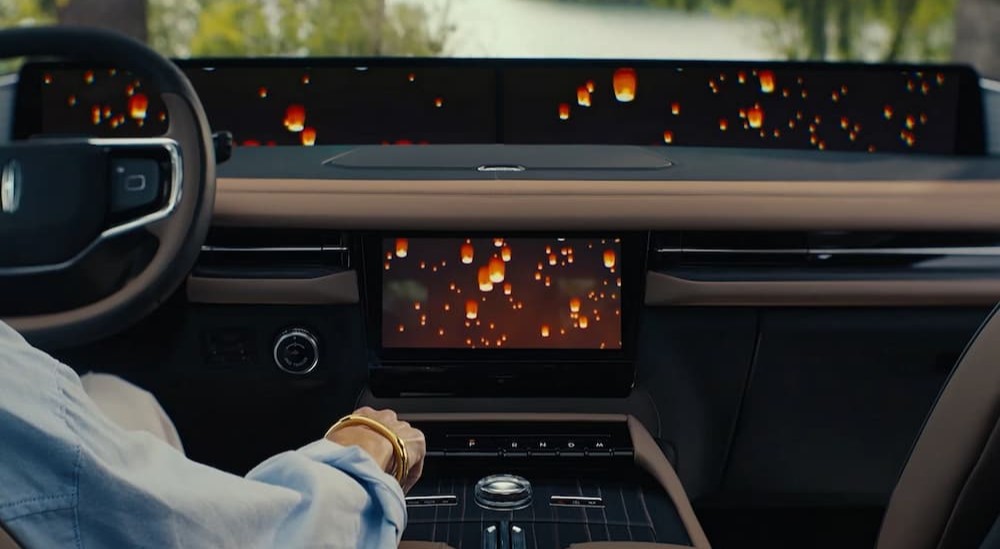
Even the base trim is equipped with a 48-inch configurable panoramic information display and a 28-speaker Revel Ultima 3D audio system, not to mention heated and ventilated front seats and available Power Pitch and Slide second-row captain’s chairs with heating, ventilation, and massage functions.
The generous infotainment display is an obvious highlight, and it even allows passengers to stream video and gaming apps when the vehicle is in park. An additional 11.1-inch touchscreen serves as the main control center for the SUV’s infotainment system, and Lincoln also offers a rear-seat entertainment system with dual 10.1-inch touchscreens, so second-row riders can take advantage of the Lincoln Play system, complete with streaming content and 16 GB of internal storage per display.
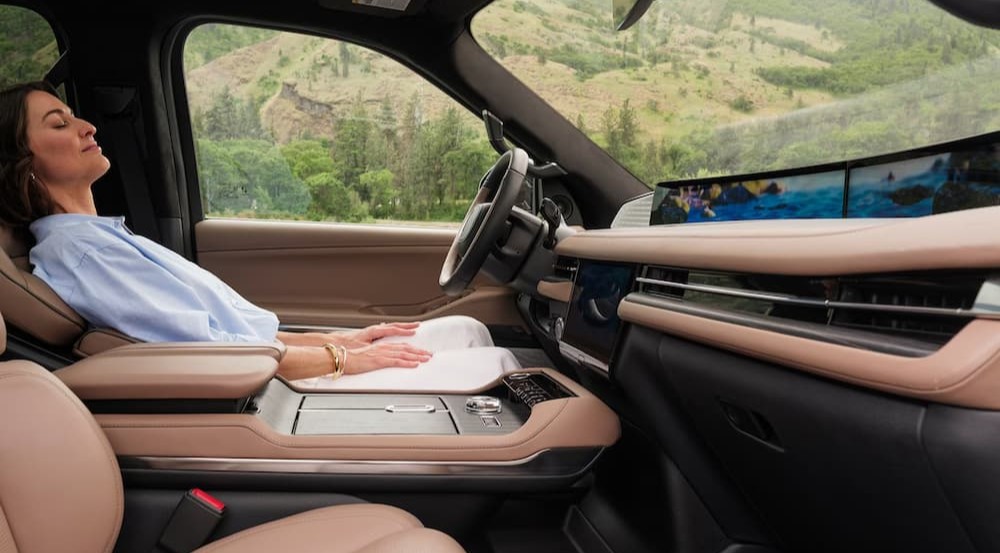
Premium materials are par for the course on the Lincoln, but if there’s one feature that really sets the Navigator apart from the crowd, it’s Lincoln Rejuvenate. Billed as a multisensory spa-like experience that’s designed to provide drivers with a moment of relaxation in a hectic world, Lincoln Rejuvenate is an oasis for the senses.
Simply activate the system for a five-minute or ten-minute session, and Lincoln Rejuvenate will recline and warm the seat, activate the massage function and ambient lighting system, and cue up a soothing playlist of nature sounds with selectable modes like Waterfall Meditation and Aurora Borealis. Lincoln’s Digital Scent feature also works its magic, infusing the interior with a subtle, calming scent that performs like aromatherapy.
The entry-level Escalade isn’t quite as well equipped as the Navigator right out of the box, and while this can largely be attributed to the SUV’s lower starting price, the results can be a little disappointing for those who expect a thoroughly high-end driving experience. Take the Escalade’s infotainment arsenal: Its 55-inch display and 21-speaker AKG audio system aren’t shabby, but they both pale in comparison to the Navigator’s 28-speaker stereo and 60 inches of combined front-row displays.
Like the Lincoln, the Cadillac offers a rear-seat entertainment system and available captain’s chairs with massaging seats, but it lacks the full Rejuvenation treatment with unique creature features, such as the Digital Scent system. The Escalade-V does introduce some fun parlor tricks, like a front-row refrigerator and a performance-tuned adaptive air suspension, but its sky-high MSRP limits its appeal.
While the two full-size SUVs offer similarly impressive safety suites with comparable ADAS, hands-free driving tech is another story altogether. The Navigator is equipped with Ford’s critically acclaimed BlueCruise system on every trim, while the Cadillac makes do with GM’s Super Cruise. Both systems offer Level 2 hands-free capability, but BlueCruise bests Super Cruise by nearly ten points in Consumer Reports’ definitive rankings of current automated offerings.
A World of Luxury at LaFontaine Lincoln Grand Blanc
So which full-size luxury SUV is the right choice for your driving lifestyle? It all comes down to value. Both SUVs offer plenty of room for passengers and cargo, as well as a long list of premium features, and will make you feel like royalty on the road with their generous ride height and stately dimensions.
From massaging seats that’ll help you work out the stress of a long day on your evening commute to high-end sound systems and rear-seat infotainment tech that’ll keep kids occupied on longer road trips, these full-size models let drivers bring the comforts of home on their next journey. That said, the Lincoln offers better value when you factor in the SUV’s superior performance, efficiency, and towing capacity.
There’s no doubting Cadillac’s luxury resume, but the 2026 Escalade starts to look like something of a one-trick pony when stacked up against the 2026 Lincoln Navigator. It might deliver a refined driving experience, but the Escalade is a little underwhelming if you’re in the market for a full-size model that isn’t afraid to put in a little hard work.
Connect with us
